


Scientific and practical peer-reviewed journal "Plant Health and Quarantine"
Paper size А4 (210х297 mm)
Capacity: from 64 full-color А4 pages
Circulation: 3000 copies
Frequency: 4 issues per year
Target audience: agriculture and plant health specialists and other stakeholders
Content:
The journal covers the main trends in plant science, best practices in plant health and protection, new plant protection methods and products used in Russia and overseas as well as phytosanitary condition of the territory of the Russian Federation.
This publication contains objective scientific, educational and analytical information: opinions of leading experts on the most fundamental issues of plant quarantine, data on the latest significant foreign and domestic plant health research, materials on thematic conferences.
Current issue
IDENTIFICATION
The Central American weed species Solanum houstonii Martyn can potentially contaminate regulated articles entering Russia from regions of its occurrence. Seeds of S. houstonii can be morphologically similar to those of quarantine species for the EAEU countries, such as S. elaeagnifolium Cav. and S. rostratum Dunal. However, descriptions and identification methods for them are lacking in the existing specialized literature, which can lead to misdiagnosis and, consequently, economic losses during phytosanitary control. To enhance identification tests for quarantine Solanum species, the morphological and genetic characteristics of S. houstonii were studied using original material. A clear distinction was demonstrated between the seeds of S. houstonii and those of S. elaeagnifolium , and a marked resemblance to S. rostratum . Molecular genetic analysis demonstrated that S. houstonii can be readily differentiated from each of the quarantine Solanum species, specifically the ITS1-5.8S-ITS and trnL-trnF loci. Additionally, the potential phylogenetic relationships of the studied sample were analyzed and described.
MORPHOLOGY
Phytopathogenic fungi of the genus Ophiostoma, which cause sapstain in coniferous wood, represent a major constraint on timber exports to several countries. All species of this genus form similar sporulation structures, significantly complicating their visual identification. This article presents a brief overview of two species of the genus Ophiostoma isolated from coniferous wood. A detailed morphological description of the spore-bearing structures (perithecia and synnemata) formed on coniferous wood samples is provided. Statistical analysis using the Mann-Whitney test revealed that the sizes of these structures vary significantly depending on the wood species, indicating high phenotypic plasticity of the studied species and confirming the limited reliability of morphological identification. The paper also presents a cultural and morphological description of the isolates on four nutrient media, noting the dependence of colony growth rate, pigmentation level, and sporulation intensity on the medium composition. The study indicates that a reliable assessment of the phytosanitary condition of wood requires a comprehensive study of the cultural and morphological characteristics of pathogens. This approach, based on the analysis of phenotypic variability, allows for not only diagnostic purposes but also providing insight into fungal adaptation to colonizing wood tissue.
SCIENTIFIC RESEARCH
The natural aggregation pheromone of beetles of the genus Tribolium is 4,8-dimethyldecanal and is a mixture of the stereoisomers (4R, 8R), (4R, 8S), (4S, 8R), and (4S, 8S) in a ratio of 4:4:1:1. Synthesizing a mixture of such a composition is quite problematic. A new method for producing natural tribolure by mixing 2 parts of the racemate 4,8-dimethyldecanal and 3 parts of (4R, 8RS)-dimethyldecanal is proposed. The synthesis of racemates is simpler and less expensive than the synthesis of optically active compounds. (4R, 8RS)-dimethyldecanal exhibits optical activity only at the 4-position, simplifying the task compared to synthesizing substances with two optically active centers. This article presents methods for synthesizing these components of the pheromone mixture. The synthesis of the substances was carried out using known schemes, to which we introduced a number of significant improvements. Laboratory comparative tests in an olfactometer showed that the racemate of 4,8-dimethyldecanal actively attracts Tribolium castaneum beetles. A mixture of stereoisomers was tested for T. castaneum. The “optically active” tribolure mixture exhibited attractiveness at a lower concentration than the racemate in experiments on T. castaneum. Under the experimental conditions, the racemate attracted T. castaneum starting at a dose of 50 ng, and began to repel insects at a dose of 10,000 ng. A mixture of stereoisomers, identical to the natural pheromone, attracted insects at a minimum dose of 2 ng.
INVASIONS
Aegilops cylindrica Host. is an annual grass (Poaceae) and an allotetraploid (2n = 28, DDCC genomes) with high invasive potential. The stages of invasion (introduction, colonization, and naturalization) are influenced by the biomorphological characteristics of the plant’s shoot system; the variability of these traits is likely explained by phenotypic plasticity and heterospermy. Field studies revealed variation in the shoot system of the species: erect, sparsely tillered shoots predominate on ruderal substrates, whereas geniculate, highly tillered shoots are more common in agrocenoses and along roadsides. These morphotypes presumably correspond to spring-monocyclic and winter-dicyclic developmental strategies, enabling the species to successfully colonize three categories of habitats: anthropogenic (ruderal, segetal, and pasture sites, as well as urban infrastructure), semi-natural, and natural (steppe plant communities). The species’ association with road infrastructure facilitates its further spread into adjacent agrophytocenoses and natural communities, thereby enhancing the invasive potential of Aegilops cylindrica.
Viral diseases of potato and tomato are widespread globally. By accumulating in plants, they cause significant economic losses to agricultural production. New viruses detected in crops pose a particular threat to food security, requiring special attention and further study. Potato virus H (PVH, Carlavirus chisolani), a member of the genus Carlavirus, was first described in China in 2012; in 2019, it was recorded outside China, specifically in Bangladesh. This article reviews the biological properties, distribution, and economic impact of PVH, as well as its genetic characteristics in comparison with closely related species and current methods for diagnosing and controlling the pathogen.
This article presents an analytical review of the wheat blast pathogen, Magnaporthe oryzae Triticum pathotype B.C. Couch and L.M. Kohn., which poses a potential threat to grain production in the Russian Federation. It analyzes data on its biological characteristics, symptoms, diagnostic methods, pathways, economic damage, and integrated control measures. The paper also traces the geographic distribution of Magnaporthe oryzae Triticum pathotype since its first detection. The article also presents illustrations of wheat blast symptoms, as well as macroand microscopic characters of the pathogen. The results of this analysis are of practical relevance to phytosanitary specialists and agricultural specialists.
FIELD TESTS
Three closely related Polygraphus species occur in the studied fir stands: Polygraphus proximus Blandford, Polygraphus poligraphus L. and Polygraphus subopacus Thoms. (Krivolutskaya, 1996; Stark, 1952; Krivets, Kerchev et al., 2015). Polygraphus proximus Blandford, 1894, the most aggressive and economically important invasive species, was regarded as an endemic species of the Far Eastern entomofauna until 2008. Following its introduction into Southern Siberia, it is now one of the main pests in the complex of factors causing the modern large-scale dieback of Siberian fir forests. The species is included in the quarantine lists of the Russian Federation, the Eurasian Economic Union, and several countries importing Russian timber. In accordance with the International Plant Protection Convention and the Federal Law “On Plant Quarantine”, the timely detection of Polygraphus proximus is of major practical importance in the context of fulfilling both the international obligations of the Russian Federation and the legislation of the Russian Federation in the field of plant quarantine. This article presents the results of field trials of various attractant blends for detecting and monitoring pests of the genus Polygraphus using barrier-funnel traps. The trials were conducted in Irkutsk Oblast in the summer of 2025. The results demonstrated that a blend consisting of α-pinene, (2Z)-2-(3,3-dimethylcyclohexylidene) ethanol proved to be the most effective.
Announcements
2025-10-28
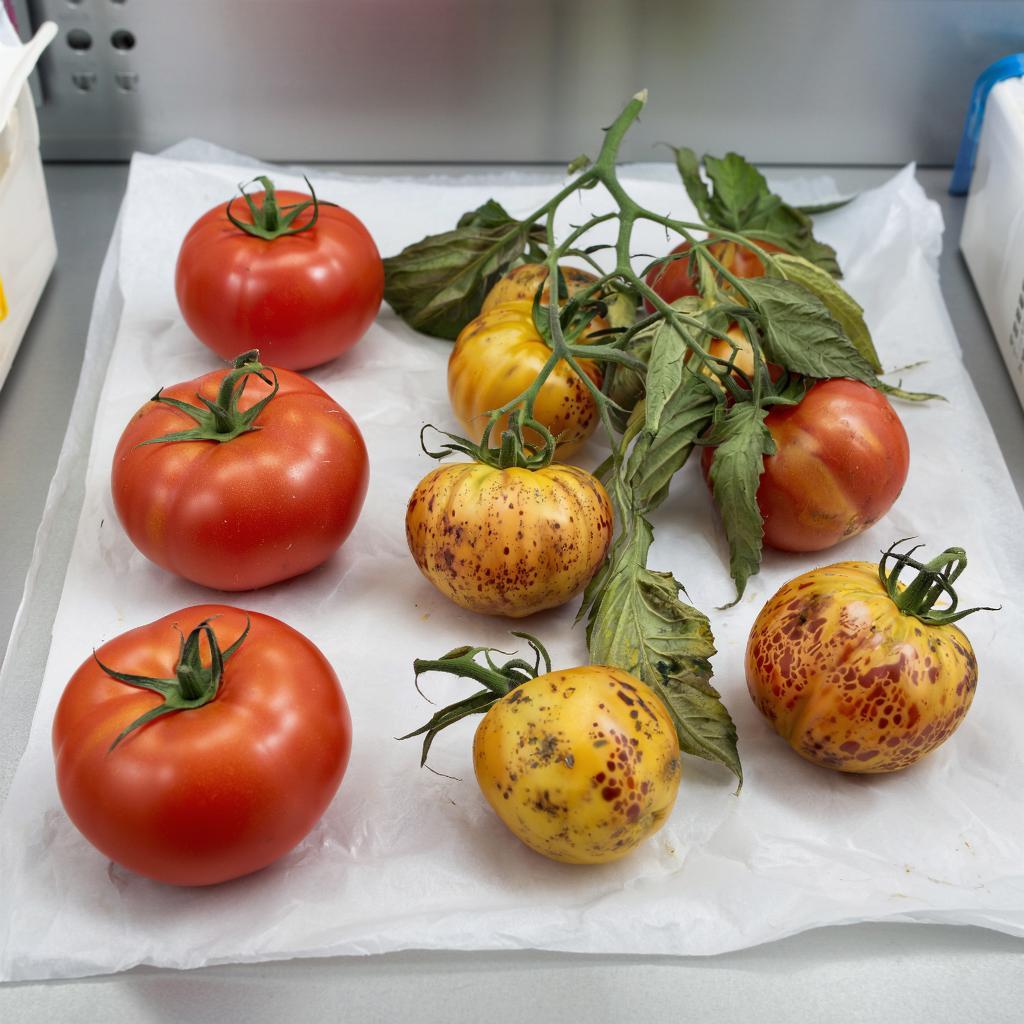
Томаты, зараженные опасным вирусом, не прошли фитосанитарный контроль в лаборатории ФГБУ «ВНИИКР» в Воронеже
28 октября 2025 года специалисты Воронежского филиала ФГБУ «ВНИИКР» уведомили Управление Россельхознадзора по Воронежской, Белгородской и Липецкой областям о выявлении карантинных объектов в товарной партии плодоовощной продукции.
| More Announcements... |


